1
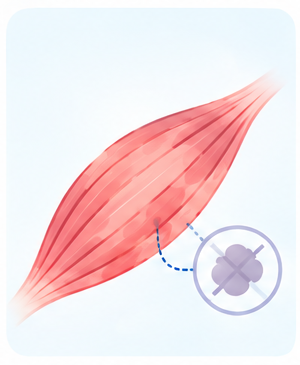
The genetic problem
In limb-girdle muscular dystrophy (LGMD), a change in a gene means the body makes too little or no functional protein. Over time, this can lead to weaker muscles.
Ten years ago, gene therapy was largely a promise. Today there are thousands of clinical trials underway worldwide and dozens of approved treatments. The question is no longer whether gene therapy can work, but how quickly we can bring it to people living with LGMD.

The fundamental idea is simple: correct, replace, silence, or supplement faulty genes that cause disease. What once faced major technical and safety challenges has now resulted in approved therapies for several rare diseases and growing optimism for many others.
The gene therapy sector has grown by a factor of 10 to 15 in the space of about ten years. We now have approved gene therapies for conditions such as SMA, inherited blindness, haemophilia, sickle cell disease, and certain forms of cancer. We have hundreds of clinical trials for rare genetic disorders, and a manufacturing, regulatory, and clinical infrastructure that barely existed a decade ago.
A new approach. Real hope for people with limb-girdle muscular dystrophy.
In limb-girdle muscular dystrophy (LGMD), a change in a gene means the body makes too little or no functional protein. Over time, this can lead to weaker muscles.
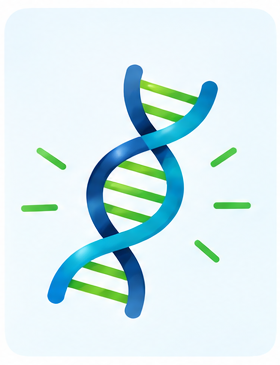
Gene therapy delivers a healthy copy of the gene to give cells the instructions to make the missing protein again.

The healthy gene is packaged into a harmless virus, called a vector, that can deliver the gene to muscle cells.
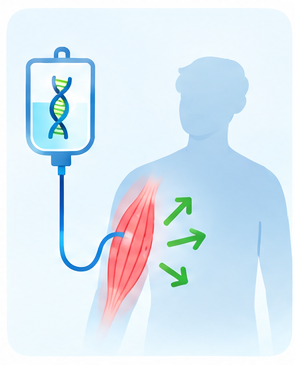
The vector is given (for example by an infusion) and travels through the body to muscle tissue, where it delivers the healthy gene into cells.
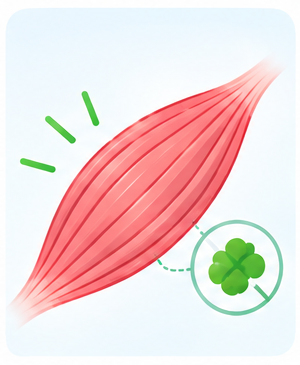
Muscle cells use the new gene instructions to make the functional protein. This can help muscles work better and may slow or stop further muscle loss.
Gene therapy goes through careful research, testing and clinical trials to make sure it is safe and can help people. It takes time, but it brings us closer to new treatment options.

Understanding the disease and developing a therapy.

Checking safety and effectiveness in the lab.

Testing in people, in phases.

Today, gene therapy approaches fall into three categories:
Delivering a healthy copy of a missing or defective gene.
Directly correcting mutations using technologies such as CRISPR.
Increasing, decreasing, or altering gene expression.
Several landmark approvals have demonstrated the potential of gene therapy:
Restored functional vision in patients with inherited blindness.
Transformed outcomes for infants with spinal muscular atrophy (SMA).
Gene therapies for hemophilia, beta-thalassemia, sickle cell disease, and certain immunodeficiencies have shown that one-time treatments can provide years of clinical benefit.
As a result, gene therapy is increasingly viewed not merely as symptom management, but as a pathway toward disease modification and potentially long-term correction of genetic disorders.
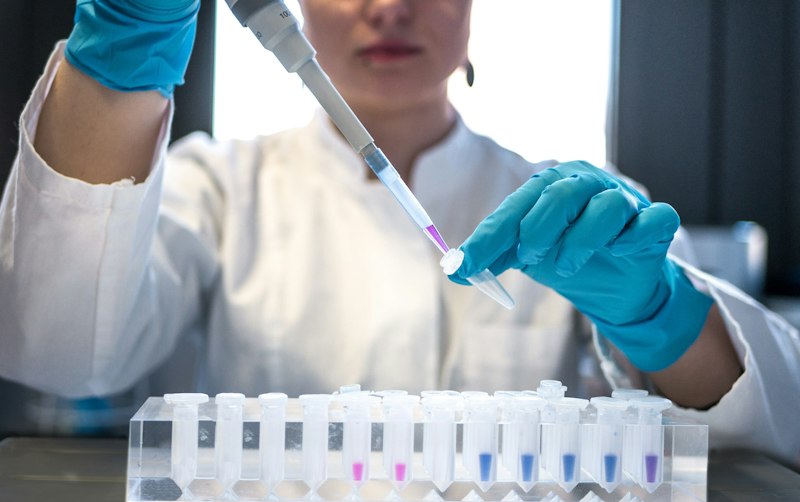
Neuromuscular diseases are among the most promising targets for gene therapy because many are caused by mutations in a single gene. Once the genetic defect is identified, researchers can design therapies aimed at addressing the root cause rather than treating symptoms.
Several factors have accelerated progress: advances in genetic testing have improved diagnosis; improved genetic carriers (also called viral vectors or AAVs) can efficiently target muscle tissue; there is greater insight into disease progression; and international patient registries have enabled clinical trials in rare diseases. The most commonly used delivery vehicles are adeno-associated viruses (AAVs), which can transport therapeutic genes into muscle cells and, in some cases, motor neurons.
The greatest success story to date is SMA. Patients with SMA lack a functional SMN1 gene, leading to progressive muscle weakness and often death in infancy. Gene therapy has fundamentally changed the outlook for many affected children. Zolgensma delivers a working copy of the SMN1 gene through a single intravenous infusion. Children treated early can achieve developmental milestones that were previously unimaginable, including sitting, standing, and in some cases walking independently. SMA demonstrated for the first time that systemic gene therapy could successfully target a neuromuscular disease throughout the body.
DMD has become another major focus of gene therapy research. The dystrophin gene is too large to fit into standard AAV vectors, so researchers developed "micro-dystrophin" therapies containing a shortened but functional version of the gene. Several clinical trials have demonstrated production of micro-dystrophin protein in muscle tissue, improvements in biomarkers, and evidence of slower disease progression. Although challenges remain regarding long-term durability, it has been shown that gene therapy can target even very large muscle diseases.
For LGMD, progress has accelerated significantly over the last decade. LGMD consists of more than 30 genetic subtypes, making development more complex than for diseases caused by a single gene. However, many subtypes are well suited to gene replacement strategies. Among the most advanced programs are:
Gene therapy studies have demonstrated encouraging improvements in muscle pathology and function. Several clinical programmes are underway or have reported early positive data.
The ATA-200 programme, developed by Genethon and its spin-off Atamyo Therapeutics, is already in a Phase 1b clinical trial (NCT05973630), with pediatric patients dosed to date.
LGMD R1 (formerly LGMD2A), caused by mutations in the CAPN3 gene, has emerged as one of the most promising gene therapy candidates. The most advanced program is being developed by Genethon and its spin-off Atamyo Therapeutics.
Uses an AAV vector carrying a healthy CAPN3 gene
Has demonstrated robust safety and efficacy in pre-clinical models
Has benefited from more than a decade of preclinical development
Has received regulatory support to enter first-in-human clinical testing
The Phase 1 trial is particularly important because it represents the first systemic gene replacement therapy specifically developed for patients with LGMD R1.
Gene therapy is advancing rapidly. Yet for rare diseases like LGMD, scientific progress alone is not enough. Beyond the challenges of manufacturing, regulation and clinical development, promising therapies need funding to move from the laboratory into clinical trials and ultimately to patients.
For ultra-rare diseases such as LGMD, scientific feasibility used to be, but is no longer, the primary obstacle. The challenge is securing sufficient funding to advance therapies through clinical development and regulatory approval.
Gene therapy for LGMD is not only a promise on paper. Below is real footage of improvement in a patient from the ATA-200 trial for ambulant patients affected by LGMD subtype R5/2C.
The field is entering a new era. The first generation of gene therapies proved that genetic diseases can be treated at their source. The next generation aims to improve efficiency, safety, durability, and affordability while expanding into larger patient populations.
For families living with Limb-Girdle Muscular Dystrophy, gene therapy is more than a scientific promise. It represents the possibility of changing the course of a progressive muscle disease. In this conversation, Ashlee Vance and Dyno Therapeutics co-founder Adrian Veres explore one of the biggest challenges in gene therapy: getting a therapy safely and effectively to the cells that need it. For muscle diseases such as LGMD, that question is especially relevant.
Learn how a Phase 1 clinical trial works, why it matters, and what it takes to bring a promising therapy from the laboratory to the patients who are waiting.